
Distribution
(399K views. Student language first.)
Building distribution by entering the student's world.
Selected posts: 399K · 344K · 133K displayed views
The same knowledge can be ignored in one form and recognized immediately in another.
That was the communication problem behind my work on Learnzy's Instagram. I understood preparation problems, but the student scrolling past did not owe me their attention. Before explaining anything, I needed an entry point into their world.
Unlike Search, the viewer had not just typed a question. I was trying to help them recognize a question or ambition they already carried.
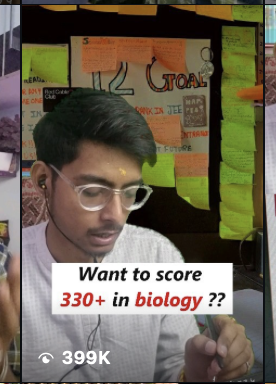
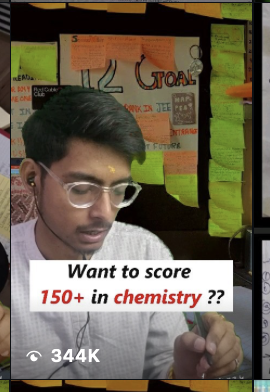
01. Start With The Problem The Student Recognizes
There is a difference between the problem I understand and the problem a student recognizes.
I might think about inconsistent preparation, performance under pressure, or how someone learns from mistakes. A student might say, "I studied all day, but I still cannot solve questions," or "I keep getting the same marks in mocks."
Those are not simply less technical descriptions. They reveal what the person notices, what frustrates them, and what they want to change.
The thumbnails make that choice visible: "Want to score 150+ in chemistry?" and "Want to score 330+ in biology?" lead with an outcome, not my explanation of the mechanism.
The knowledge is mine. The language has to be theirs.
That does not mean every student wants the same score. A qualification question and a high subject-score question address different ambitions. Being specific helps the intended viewer recognize which conversation is for them.
02. Earn The Opportunity To Explain
A Reel arrives among many things someone could choose to watch. I cannot assume they will wait for the context.
My approach was to make the opening legible quickly: a familiar situation, a recognizable frustration, or an outcome that matters to the student.
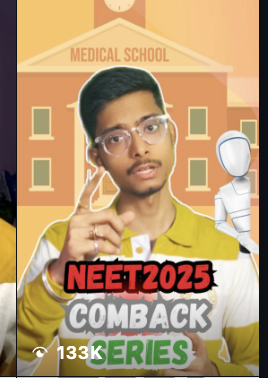
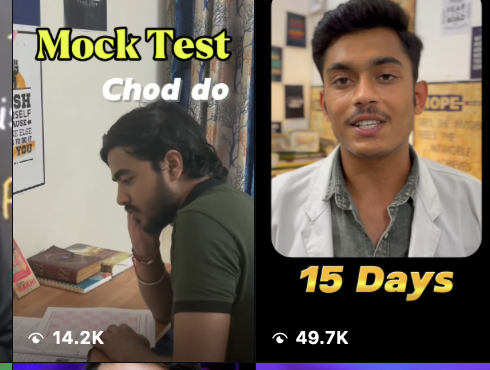
The selected posts show several entry points: subject scores, qualifying for NEET, a comeback, and mock tests. They give the viewer a reason to care before asking them to consider an explanation.
The sequence I work toward is:
Recognition → relevance → useful explanation → a reason to return.
The opening earns an opportunity. It is not the whole job. If the explanation does not deliver on the promise, the hook has attracted attention without making the content useful.
03. Enter Through A World That Already Exists
A NEET aspirant is not only a NEET aspirant. They also follow sport, films, creators, jokes, and people they identify with.
That matters to how I think about future content. The entry point need not always be an instruction to study. A familiar story about handling pressure or recovering from failure can create a bridge to preparation, provided the connection is real.
I do not want to force a lesson into every trend. I want to ask whether something the viewer already understands can make an unfamiliar idea easier to grasp.
The exam-specific openings shown here are one expression of that principle. Cultural references are another direction to explore, not an outcome established by these screenshots.
04. Make The Useful Idea Worth Discovering
Search and Instagram start from different situations.
On Search, the student has expressed a question. On Instagram, I may need to establish why an idea matters before explaining it.
That changes the order of communication, not the need for substance.
I want someone to leave with a useful distinction, a clearer decision, or a practical next step. A student should get something from the content even if they never install Learnzy.
When a product reference fits, it should continue that explanation: here is the problem, here is a useful way to understand it, and here is a tool that can help you act. It should not interrupt an unrelated piece of content just because I need a promotion.
05. Separate Reach From What Comes Next
Selected posts show these public view counts:
| Post opening | Displayed views |
|---|---|
| Want to score 330+ in biology? | 399K |
| Want to score 150+ in chemistry? | 344K |
| NEET 2025 Comeback Series | 133K |
| Want to qualify NEET 2024? | 82.3K |
| Want to score 400+ in NEET 2024? | 80.9K |
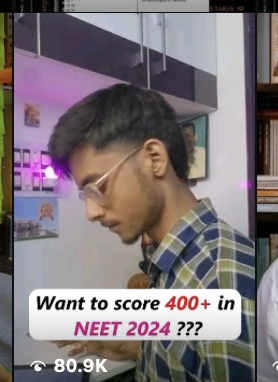
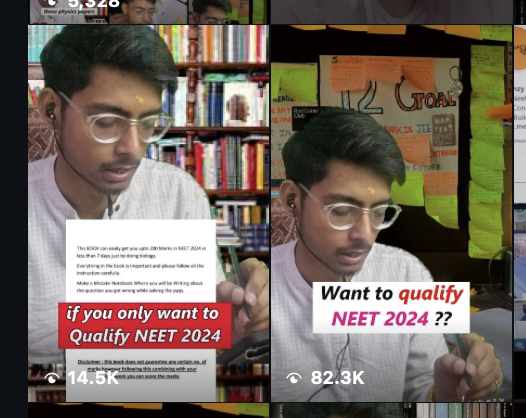
These are view counts, not unique viewers or conversions. Retention, saves, shares, profile visits, and visits to Learnzy are the next evidence to examine.
What I Learned
Knowing the subject is not the same thing as making someone care about it.
Search asks me to understand the person behind the query. Instagram asks me to understand the person before there is a query.
Expertise creates the value. The audience's world creates the entry point.