
Engineering
Creator Partnerships
(2,000 prospects. 100 personalised emails. 2 days.)
AI-assisted outreach, backed by partner onboarding and attribution.
I wanted to build Learnzy's creator partnership programme without manually researching and writing every outreach email from scratch.
I used Intinct, an AI assistant integrated into WhatsApp, to execute personalised outreach and follow-ups. In two days, I sent approximately 100 personalised emails, with a reported reply rate of around 27%. I also researched and built a warm pipeline of 2,000 potential creator partners.
But outreach was only the beginning. I also built Learnzy's partner onboarding and attribution system to connect creator partnerships with the students they referred and the actions those students took inside the app.
As a solo founder, I needed both: a way to execute outreach quickly and a system that could support a larger group of partners without making every follow-up, onboarding step, and performance check a separate manual task.
Run Outreach Through WhatsApp
Intinct was part of execution, not just a tool for polishing a draft. I used the WhatsApp assistant to personalise messages for individual creators, send outreach, and follow up on conversations.
That let me work through the pipeline without composing and sending every email individually. I operated the workflow and remained involved in partnership decisions, briefs, negotiations, and agreements.
The two-day run was an early test of that approach. The larger aim was to make creator outreach something I could repeat and expand as one person.
Build The System Around The Outreach
I used an existing assistant for outreach and built the Learnzy-specific platform around it: creator onboarding, unique tracking links, and a dashboard for examining student activity by creator and date. The broader workflow carries the work through follow-ups, briefs, and contracts into that platform.
flowchart TD
  A[Creator prospects] --> B[Intinct outreach and follow-ups]
  B --> C[Briefs and agreements]
  C --> D[Partner onboarding and tracking links]
  D --> E[Student journey attribution]
Once a creator is onboarded, their tracking link connects the partnership to student activity. I can then examine each creator's referrals rather than treating all incoming traffic as one group.
Follow The Student, Not Just The Click
A click tells me someone followed a link. It does not tell me whether they found value in Learnzy.
The student-journey view separates clicks, first opens, sign-in, and trial starts from later activity: completing previous-year questions (PYQs), viewing analysis, scheduling revision, and paying.
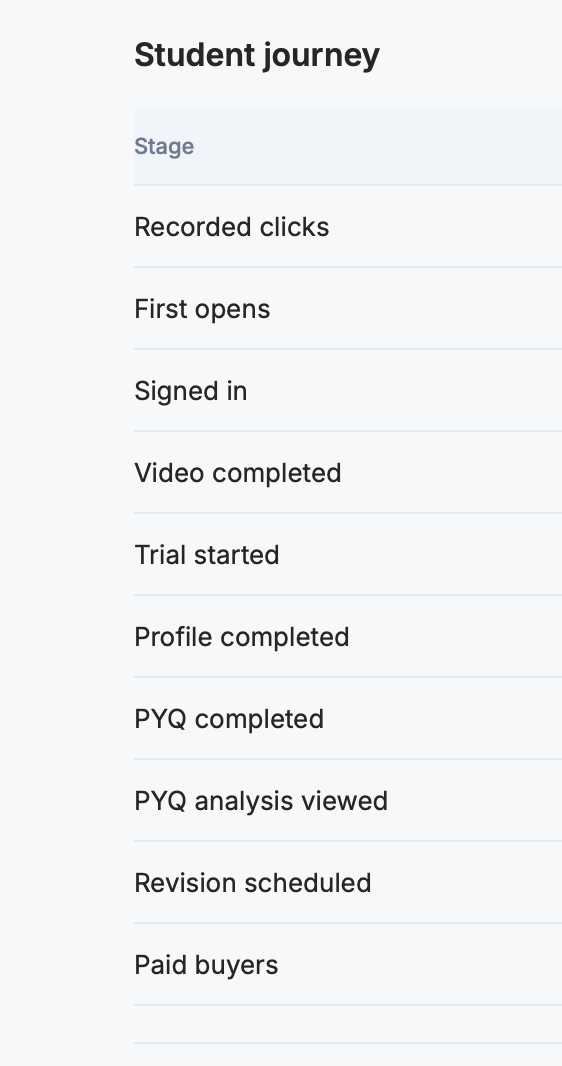
Those stages help me decide where to investigate. If students open the app but do not complete a practice session, I would look at onboarding and product friction as well as the creator's audience. More clicks alone would not explain the drop-off.
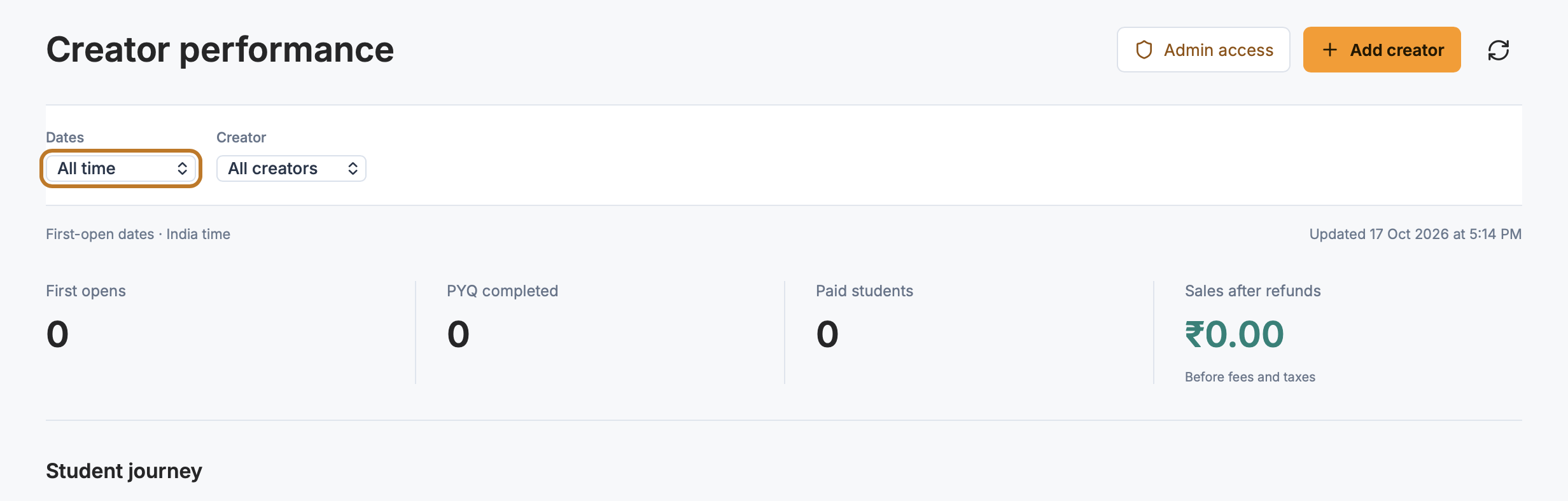
The dashboard adds creator and date filters, with separate totals for first opens, completed PYQs, paid students, and sales after refunds.
Built For The Next Round
My next target is 50+ signed creator partners.
The outreach run gave me an early result; the onboarding and attribution platform gives me a way to operate and evaluate the next round. The system is designed so that a larger creator programme does not require me to manually repeat every task for every partner.
That is the point of the automation here: being able to run a creator partnership programme as a solo founder, while still seeing which partnerships bring students into meaningful product use.
Measurement note: the reply-rate denominator, reply measurement window, and treatment of follow-ups are not documented here. The dashboard screenshots show the interface with zero recorded outcomes, not conversion or revenue results.